

In today’s ever-evolving sports industry, the action isn’t just on the field, it’s in the front office, the marketing campaigns, and the behind-the-scenes decisions that shape how fans experience games or matches. If you’re passionate about sports but your skills shine more in strategy, communication, business, or leadership, a sports management program might be your ideal entry point into a dynamic, meaningful career.
What is Sport Management, Really?
At its core, sports management is the business side of sports. It’s where athletics meets strategy, marketing, finance, operations, and people management. Professionals in this field help run teams, leagues, facilities, events, and brands, from local youth sports organizations to international pro franchises.
A sports management degree introduces students to these intersections. You’ll learn about budgeting for teams, negotiating sponsorships, planning major sporting events, developing marketing strategies, and navigating legal and ethical considerations in sport. For students, like me, who love the sports industry but don’t necessarily want to coach or play professionally, it’s the perfect fit.
Plethora of Opportunity
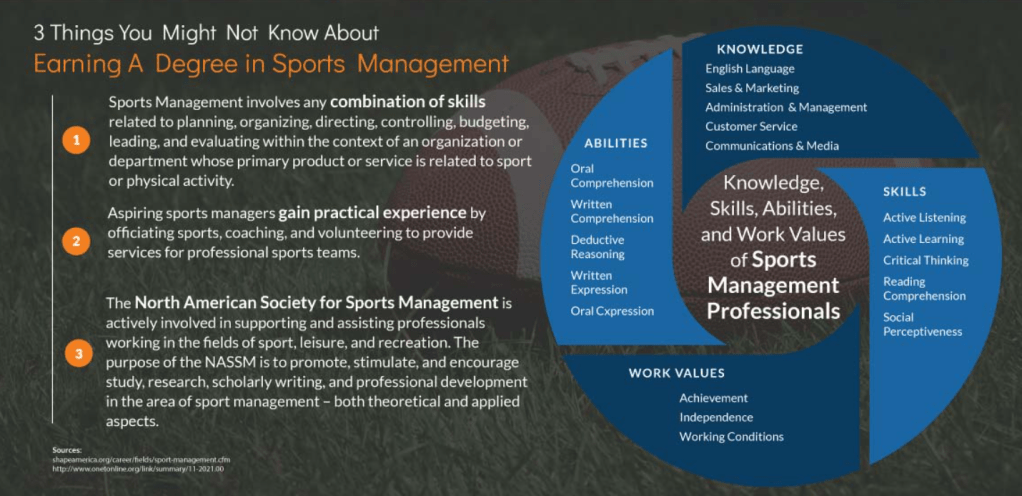
One of the primary benefits of pursuing a degree in Sports Management, is the plethora of avenues to apply your skills and develop a career within the industry. Whether you see yourself planning and promoting events for a professional sports team, working in athlete branding and representation, managing a stadium, or creating community initiatives based in athletics, the possibilities are vast. Graduates of these programs have gone on to hold roles in:
- Team or league operations and logistics.
- Sports marketing, sponsorships, and partnerships.
- Event and facility management.
- Athlete representation and branding.
- Sports media and digital communications.
- Community development through sport.
Additionally, these programs often offer flexibility, incorporating business, marketing, finance, and law components. Skills that are transferable beyond the sports world if your career goals shift over time.
Hands-On Experience
A commonality across Sports Management programs is an emphasis on real-world experience. These programs almost always require the completion of one or more internships within the sports industry. These requirements are not simply busy-work, but rather they provide students with opportunities to apply what they have been learning in their curriculum, gain a sense of direction in their career, and begin crafting their professional network.
In my experience within a Sports Management program, I was required to complete 2 internships in order to fulfill my credit requirements and receive my degree. These experiences were my first opportunities to get involved within the sports industry and have helped me to not only strengthen my resume. But also, to gain a better understanding about where I want to go in my future career and have given me more confidence as I prepare to graduate and enter the workforce.
Uniquely Passionate Community
Choosing a sports management program means surrounding yourself with people who share your love of sports and your drive to make an impact. The camaraderie and energy that naturally exist in athletics often carry into the classroom. Sports Management programs provide students with the opportunities to collaborate on projects, attend industry panels, and possibly travel to conferences or studying abroad. Personally, studying abroad within the Sports Management program was a very illuminating experience for me as I was given the opportunity to explore the nuances of sport management across differing cultures.
Additionally, this community is not just made up of colleagues but also professors. Many professors in sports management programs bring real industry experience: former team execs, marketers, analysts, and coaches who know what it takes to succeed and are eager to help you do the same. Their insights go beyond the textbook, and they often open doors through connections, guest speakers, and internship opportunities. These relationships can become the foundation of your professional network and provide a serious edge as you enter the job market.
Most Importantly, Shaping the Future!
Sports is more than just entertainment, it’s a global industry that touches culture, politics, health, and education. From stadiums to social media, sports have the ability to influence conversations and inspire movements. As the industry continues to evolve, there’s a growing need for visionary leaders who prioritize not just profit, but also purpose; Leaders who understand the value of diversity, sustainability, equity, and innovation in shaping the future of sports.
Today’s sports management professionals are helping athletes use their platforms for social change, developing inclusive administration initiatives that gives underserved youth access to athletics, and leveraging cutting-edge technology to enhance performance and fan experience. They’re making key decisions about environmental responsibility in stadium operations, advocating for gender equity in leadership, and analyzing data to inform smarter, more ethical business strategies.
If you’re someone who wants to be part of something bigger, someone who sees sports as a pathway for impact and progress, a career in sports management doesn’t just put you in the game, it empowers you with the tools and opportunity to change it.
I uploaded a brief video discussing my experience within the Sport Management Program at Gonzaga for more information: https://youtube.com/shorts/b8NAkv8kP_g?si=TKJ1bls-ebWF8mL4
 Kenny Owens-Nguyen
Leave a comment